
Madison County Criminal Court Cases
Madison County Court ordinarily hears felony prosecutions. A felony can still begin with an arraignment in Oneida City Court or one of the town and village justice courts before an indictment or superior court information moves it to County Court. Those local courts also keep misdemeanors, violations, and preliminary felony proceedings within their jurisdiction. The county's Justice Courts directory lists 21 local contacts, while Court Assignments adds addresses, clerks, calendars, judges, and assigned prosecutors.
The Supreme and County Court operation is at 138 North Court Street in Wampsville. The Unified Court System clerk handles active operational questions at 315-231-5301, weekdays from 8:30 a.m. to 4:30 p.m. The elected County Clerk is also a keeper of court proceedings, but its counter is a separate office in Building 4. Calling first matters because a town, village, or city docket stays with that local clerk unless the case advances to Madison County Court.
Route Madison County Court Records
One street address does not identify every Madison County criminal file. Oneida City Court sits at 108 Main Street in Oneida and hears local misdemeanors, violations, and early felony events. Canastota Village Court and Lenox Town Court even share a building and phone line, so a request must name the issuing court. Chittenango Village Court keeps its own docket as well. The safest route is to use the case number, court name, and most recent appearance date together.
The official county assignment page shows how this dispersed system works. Its court calendars and contact details are a better travel check than assuming every case is in Wampsville. The local court assignment source also provides a visual record of that court-by-court split.
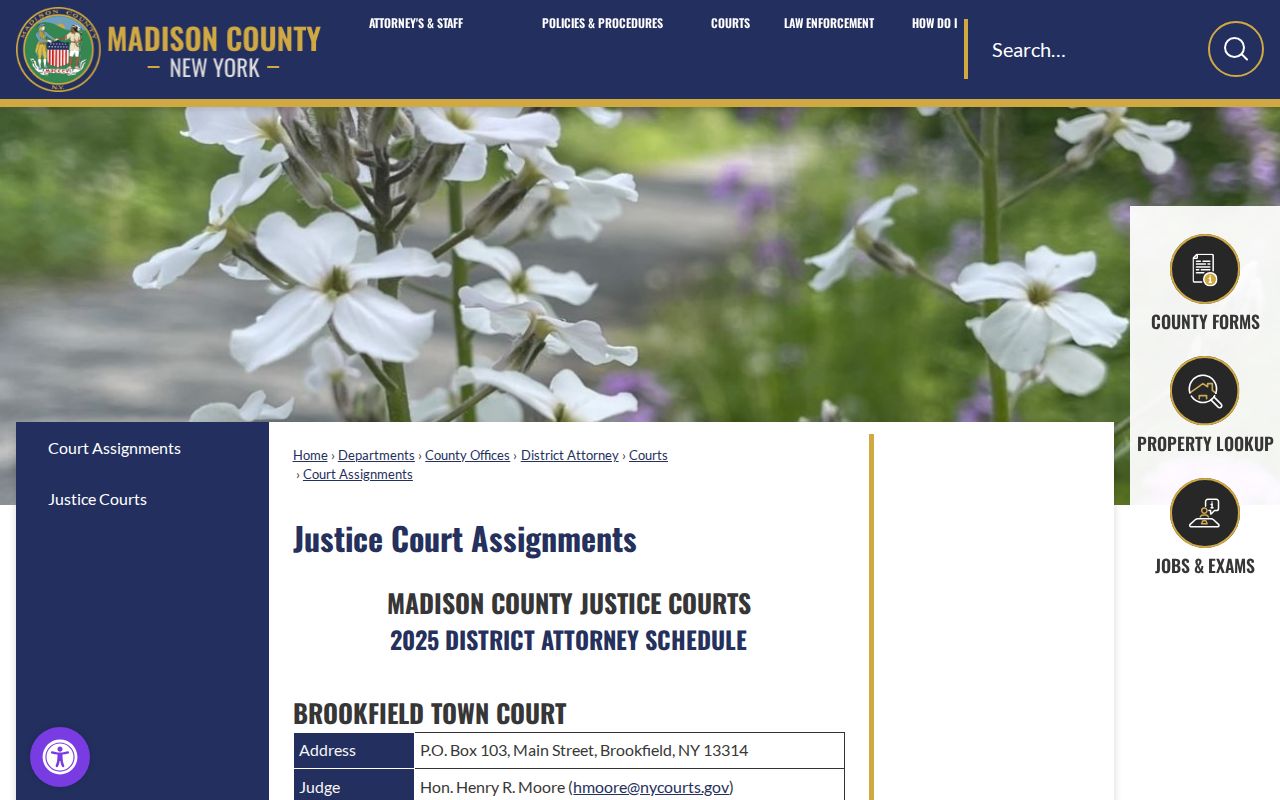
The image reinforces a key search rule: begin with the court that actually handled the appearance, then ask that clerk for the case file.
Searching Madison County Case Records
WebCriminal is the first online layer for public criminal case data. A name search can miss spelling variants, sealed cases, and matters outside the portal's active coverage. A case-number search is more exact. When a result appears, compare the court, docket, charge, date, and case status before treating it as the intended file.
- Choose Defendant Search, Case Identifier Search, or Court Calendar Search in WebCriminal.
- Enter the legal surname and first name, or use the court's full case number when known.
- Narrow the query to Madison County or a named local court and check spelling variants.
- Open the docket and read charges, calendar events, status, appearances, disposition, and sentence as separate fields.
- Contact the correct clerk for certified copies, older material, documents not downloadable online, or a missing disposition.
| Field Label | Type | Required | Notes |
|---|---|---|---|
| Search Type | Tabs | Yes | Defendant, case identifier, or court calendar |
| Defendant Last Name | Text | Search-dependent | Try exact spelling and known variants |
| First Name | Text | Search-dependent | Narrows common surnames |
| Case Number | Text | Alternative | Use the court's displayed format |
| County or Court | Dropdown | Varies | Select Madison or the named local court |
| Judge, Part, Date | Selectors | Calendar only | Finds scheduled appearances |
For a formal statewide name-and-date-of-birth product, OCA Criminal History Record Search charges $95 per search. CHRS reports public pending cases and convictions from participating courts, is not fingerprint-verified, and is not a DCJS rap sheet. New York CourtHelp record guidance explains why copies and courthouse files still require the responsible clerk.
Madison County Case Outcomes
An arrest charge, a filed charge, and a final disposition answer different questions. Police state the arrest charge at the custody stage. A prosecutor may replace, reduce, or decline it. The court docket then records the accusatory instrument, plea or trial result, judgment, and sentence. Read the last disposition for each charge rather than counting every charge line as a conviction.
- Accusatory instrument
- The complaint, information, indictment, or superior court information that begins or advances the prosecution.
- Disposition
- The way a charge ended, such as conviction, acquittal, or dismissal.
- Adjournment in contemplation of dismissal
- A conditional adjournment that can mature into dismissal if its terms are met.
- Remand
- Custody ordered without bail while the case remains pending.
Note: A scheduled appearance or open charge in a Madison County docket does not establish guilt or predict the final disposition.
Inside a Madison County Case File
A complete Madison County criminal court file is broader than its online index. It can include the charging paper, docket chronology, attorney appearances, motion practice, hearing entries, bail or remand decisions, plea or trial result, judgment, and sentence. WebCriminal may display a useful summary without offering each pleading or exhibit. Ask the clerk for the exact document rather than requesting an undefined “full history.”
| Case Number and Court | Identifies the docket and the clerk responsible for it. |
|---|---|
| Charging Document | Shows the filed accusations, statute, and offense class. |
| Docket Entries | Chronological record of filings, appearances, motions, and rulings. |
| Hearing Dates | Lists scheduled or completed calendar events, part, and judge when public. |
| Disposition and Judgment | States how each charge ended and whether judgment followed a plea or verdict. |
| Sentence and Conditions | May show custody, probation, fines, restitution, or other court-ordered terms. |
Public records limit dates of birth and other sensitive identifiers. Victim details, juvenile records, youthful-offender adjudications, sealed matters, and confidential filings may be absent or redacted. A certificate of disposition from the clerk is often the clearest official record of the outcome.
Madison County Case Prosecution
The Madison County District Attorney reviews cases and prosecutes charges, but it is not the custodian for every police report or court file. Local court assignments show which prosecutor covers each calendar. The office is in the Veterans Memorial Building, uses P.O. Box 578 in Wampsville, and answers at 315-366-2236 from 9:00 a.m. to 4:30 p.m.
The official District Attorney profile helps readers distinguish prosecution work from clerk recordkeeping.
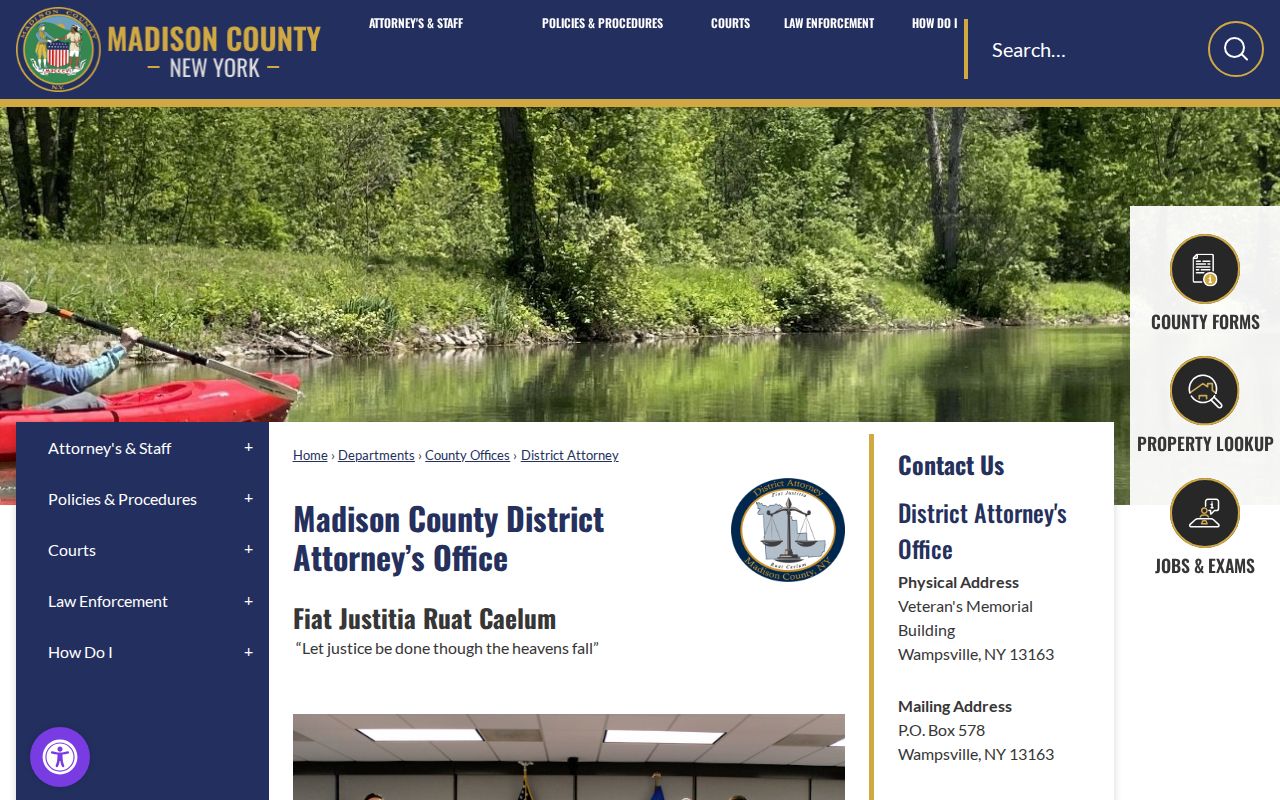
The office page confirms where prosecutorial questions go, while certified dockets and filed papers still come from the court clerk.
How a Criminal Case Moves
A Madison County felony can start in local criminal court, where arraignment and release, bail, or remand are addressed. Prosecutor review follows. A misdemeanor may remain there, while a felony moves after grand-jury action or waiver of indictment and a superior court information. County Court then handles superior-court arraignment, discovery, motions, plea negotiations or trial, sentencing, and any later appeal steps.
Case flow: Charges Filed → Arraignment → Pretrial → Plea or Trial → Disposition → Sentencing
That sequence explains why a recent WebCriminal entry can show an arrest or appearance without the later outcome. Check again after the next court event, or call the clerk with the docket number. For the custody event that came before the case, the separate Madison County arrest lookup explains agency and jail channels.
Missing Madison County Case Records
A blank WebCriminal result does not prove there was no case. The matter may be sealed, filed under a spelling variant, held by a local justice court, too old for the expected online view, or absent because the public interface does not show each file type. Start with the county Justice Courts directory, confirm the clerk, and provide the docket number or a narrow date range.
Madison County Clerk's IQS portal can help with indexed material, but free index access does not mean each record image is free. The county began charging for image access in 2023 while keeping index searching free. For copies or certification, ask the actual criminal clerk about current charges because no current Madison criminal-copy certification fee was confirmed in the official sources.
Case Record Access & Restrictions
New York court records are generally available subject to specific restrictions. Sealed outcomes under Criminal Procedure Law, youthful-offender and juvenile matters, protected victim information, financial identifiers, and confidential exhibits do not become public merely because a requester uses FOIL. Public Officers Law Article 6 governs agency records, but it does not override court sealing laws.
CPL 160.59 permits judicial sealing of certain eligible convictions after its statutory waiting period and eligibility review. The official judicial conviction-sealing law shows that sealing limits ordinary access rather than erasing every government record.
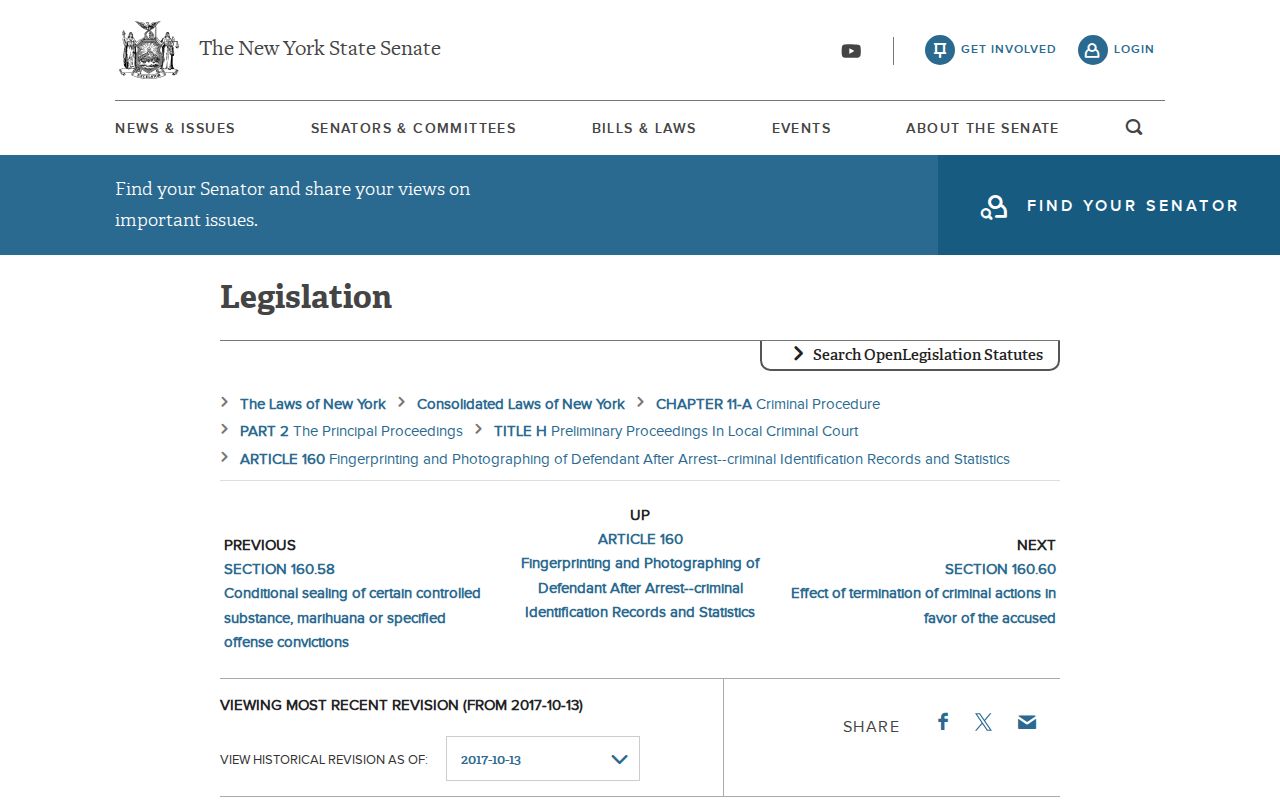
The statute image provides the controlling text. After a Madison County sealing order, check the public docket and use DCJS Personal Record Review to confirm that the statewide record reflects the court's action.
Madison County Court Record Offices
Use the office tied to the actual docket. The Wampsville court counter serves Supreme and County Court matters, while each justice court keeps its own local criminal records. Call before travel, especially when the case began in a village or town court.
Supreme and County Court
138 North Court Street
Wampsville, NY 13163
315-231-5301
Monday-Friday, 8:30 a.m.-4:30 p.m.
Madison County Clerk
Building 4, 138 North Court Street
Wampsville, NY 13163
315-366-2261
Generally 8:00 a.m.-4:00 p.m.
Oneida City Court
108 Main Street
Oneida, NY 13421
315-266-4740
Weekdays, 8:30 a.m.-4:30 p.m.
Security screening applies at the county courthouse and Oneida City Court. Confirm calendars, midday closures, and payment cutoffs with the court before a visit.