
Checking Criminal History in Madison County
No single Madison County criminal record search reaches every source. Start with the court that owns the case. Felonies ordinarily move to County Court, while many misdemeanors and violations stay in Oneida City Court or a town or village justice court. The official justice-court directory identifies the proper clerk, and WebCriminal supplies public data for many active matters. Names can be shared or misspelled, so compare the court, case number, and any public date information before treating a result as a match.
Use the record’s purpose to choose the next step. A clerk can provide a case file or certification. The arresting agency controls its own report. The jail can confirm recent county custody. A person reviewing their own statewide fingerprint history must use DCJS Personal Record Review. These sources overlap, but none replaces the others.
- Identify the event, arresting agency, and likely court.
- Search WebCriminal by defendant or case identifier and try known spelling variants.
- Confirm the hit with the named clerk, especially when an old or disposed case is missing.
- Request the police, sheriff, jail, or court document from the office that created it.
- Use fingerprint-based Personal Record Review for one’s own official New York history.
Note: An online index is a finding aid, not a certified file or proof that two people with the same name are the same person.
Madison County Records Campus
Madison County criminal case records are split even within the Wampsville campus. Supreme and County Court operate at 138 North Court Street, and the County Clerk works in Building 4 at the same address. The court line is 315-231-5301; the County Clerk is reached at 315-366-2261. The Madison County Clerk page links the IQS index, where index viewing is free but record images may require payment. Active court questions still belong with the Unified Court System clerk.
The distinction saves wasted trips. A town, village, or Oneida City case may remain at its local court rather than in Wampsville. Visitors to the county courthouse pass through a magnetometer, and published court hours are weekdays from 8:30 a.m. to 4:30 p.m. Call first when the court is unclear.
The official clerk page shows how Madison County criminal records are routed.
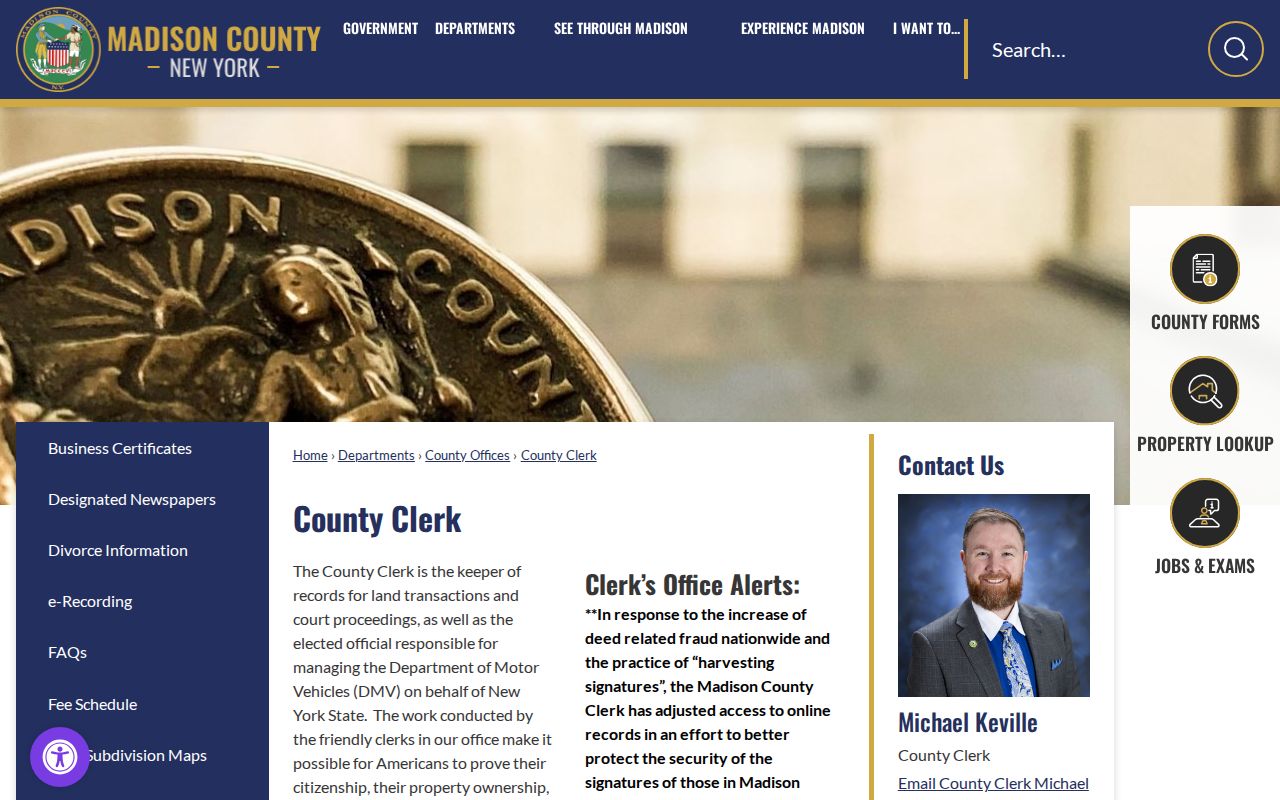
Its IQS link is useful for index research, while the correct court clerk remains the source for a full or certified criminal case file.
New York Official Background Checks
The New York State Division of Criminal Justice Services does not offer a public name search of its criminal-history repository. Its Personal Record Review is for the subject of the record or an authorized attorney. The process uses fingerprints captured through IdentoGO, which reduces the risk of confusing people who share a name. DCJS mails either a rap sheet or a no-record response and includes directions for challenging missing or incorrect data.
OCA Criminal History Record Search is a different product. It is a $95 statewide court search by name and date of birth, not a fingerprint-confirmed DCJS rap sheet. Public pending cases and convictions from participating courts may appear, while sealed matters and some court data do not. The official CHRS order page explains that the charge applies even if the search returns no record.
The OCA interface provides a formal court-name route for Madison County criminal record research.
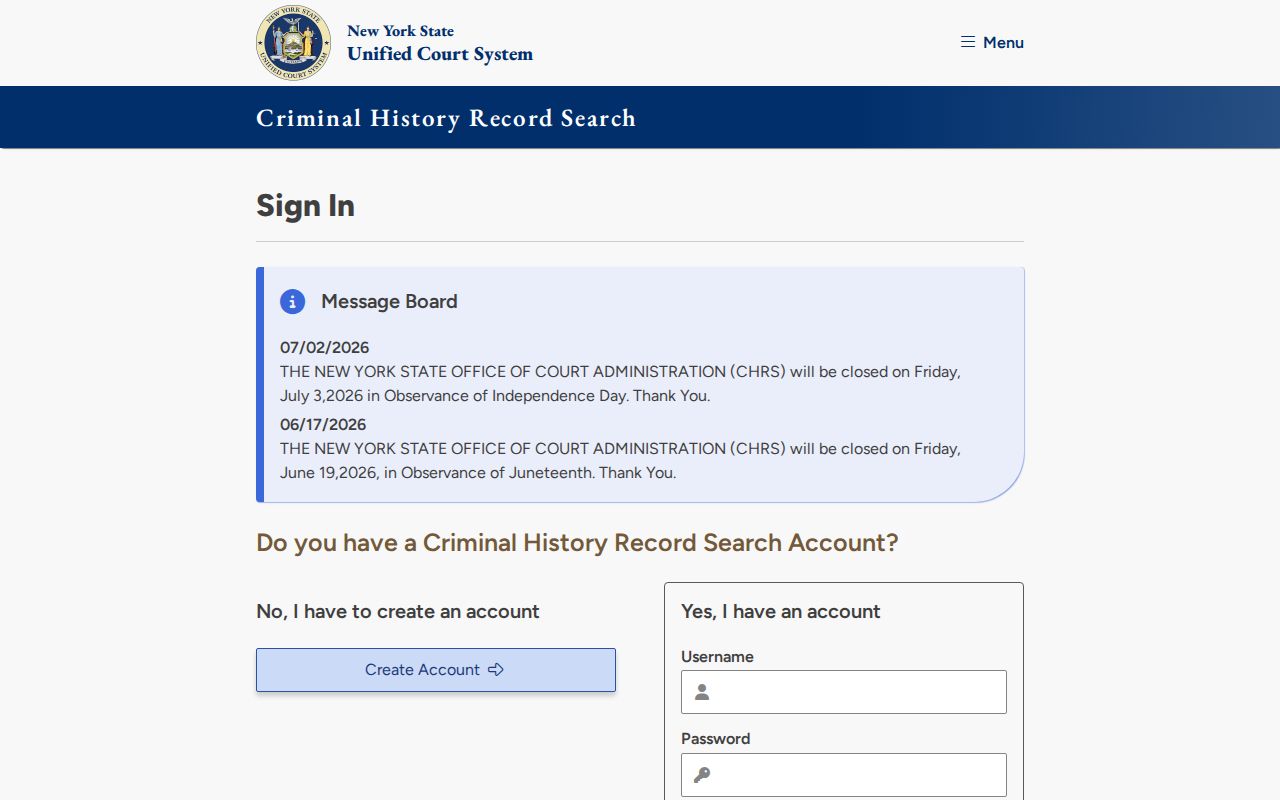
Use it for its defined court-record scope, not as a substitute for personal fingerprint review.
Madison County Personal Record Codes
Two service codes answer different self-review needs. Code 15464Z requests a suppressed response, which omits categories that New York law hides from that product. Code 15465F requests an unsuppressed response, which can include sealed or suppressed entries available to the subject. A person checking whether sealing reached the repository may need the unsuppressed version. Separate submissions are needed to receive both.
New York residents schedule through IdentoGO or call 877-472-6915. The inspected DCJS instructions list a $17.50 fingerprint processing fee as of February 2, 2026, one accepted identification document, and payment to IDEMIA. No official enrollment center inside Madison County was confirmed, so search the enrollment system by a local ZIP before booking. The Sheriff’s Pistol Permit Office can take civilian card fingerprints when the requester supplies cards, but that is not the electronic DCJS submission route.
The official enrollment page is the place to find a current fingerprint site.
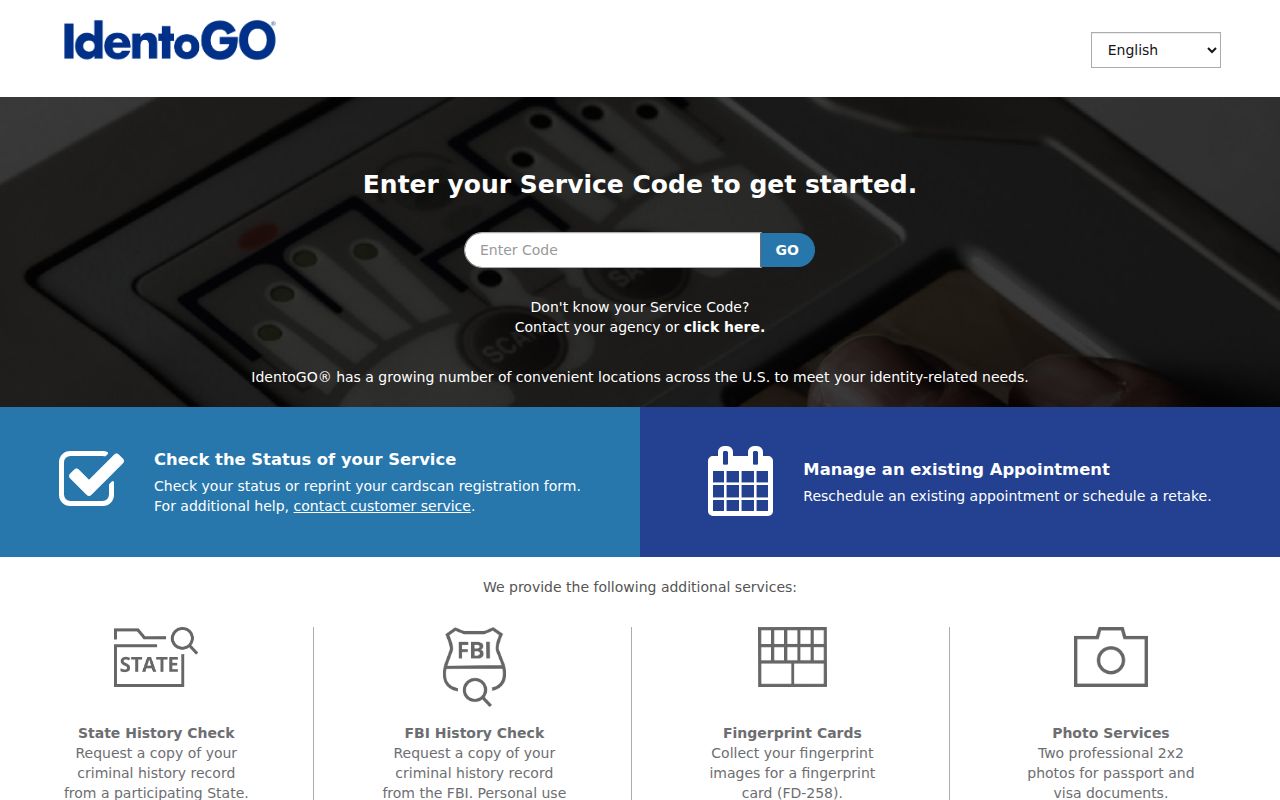
DCJS instructions, not a general web search, should control the service code and document choice.
The DCJS review instructions also explain fee waivers and corrections.
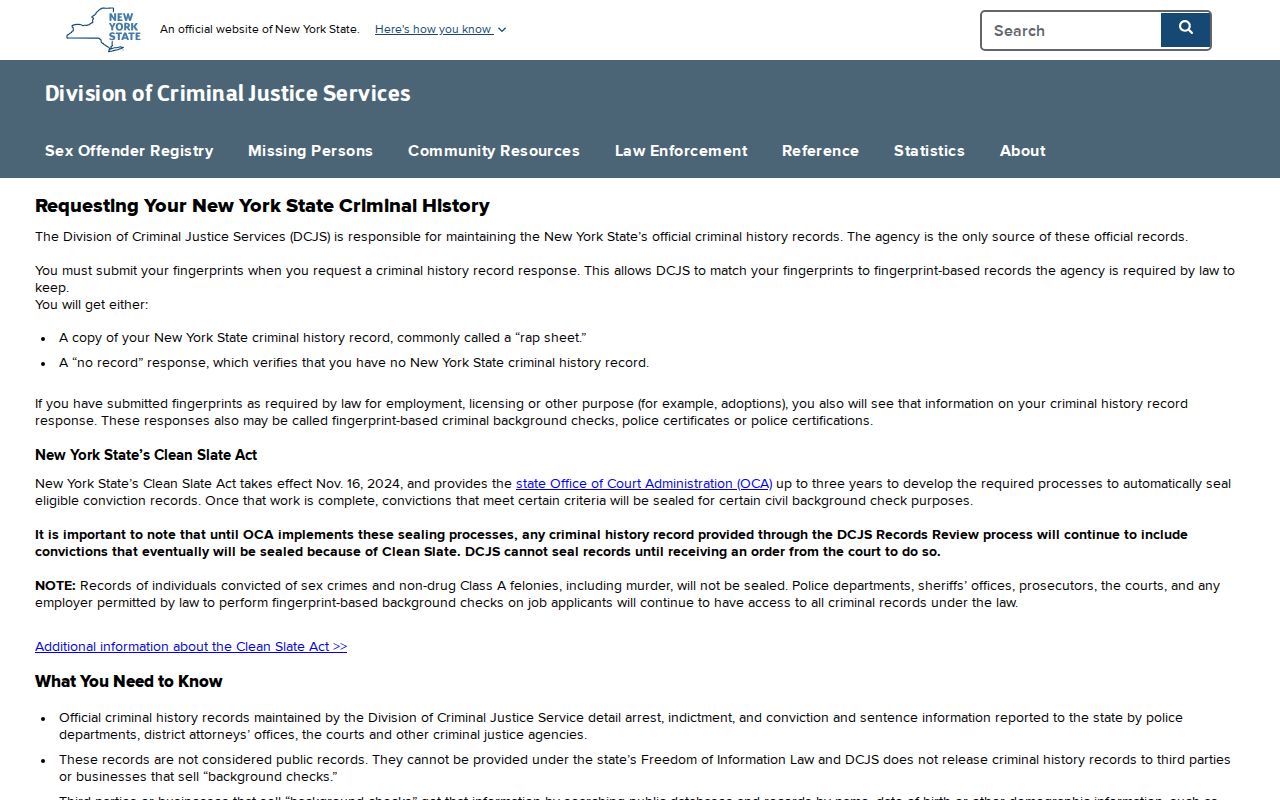
That route lets the subject inspect the state repository record and challenge a disposition that was never linked correctly.
Criminal Record Types
Madison County criminal records describe different stages of the same event. An incident report records what an agency received and investigated. An arrest record describes the enforcement action. The jail record tracks intake, bail, housing, and release. A court file begins when charges are filed and follows arraignment, motions, disposition, and sentence. DCJS then organizes fingerprint-linked arrest cycles and reported outcomes. A warrant, probation file, parole entry, and registry profile each have their own custodian and access rules.
- Police or sheriff report: request it from the agency that created it.
- Booking record: ask the Madison County Jail about county custody.
- Court file: use the court clerk, WebCriminal, or County Clerk index as appropriate.
- DCJS rap sheet: the subject uses fingerprint-based Personal Record Review.
- Custody or supervision record: use the county jail, Probation, or DOCCS based on the sentence.
Records flow in sequence: Incident → Arrest → Booking → Filed Case → Disposition → State History. A charge can change at each point.
Madison County Jail Record Routes
For a recent Madison County booking, call the jail at 315-366-2300. A lack of current custody does not mean no arrest occurred. The person may have received an appearance ticket, posted bail, been released, or moved elsewhere. The Sheriff’s app adds inmate access and alerts. Once a sentence places someone in state prison, the proper source becomes DOCCS Incarcerated Lookup.
DOCCS can search by Department ID Number, NYSID, last name, first name, and birth year. Results may show custody status, facility or release status, sentence data, county of commitment, controlling offense, and parole-related dates. It does not show a local jail stay that never became a state commitment. VINELink can supplement custody and release notifications.
The state lookup illustrates the fields used for a New York prison search.
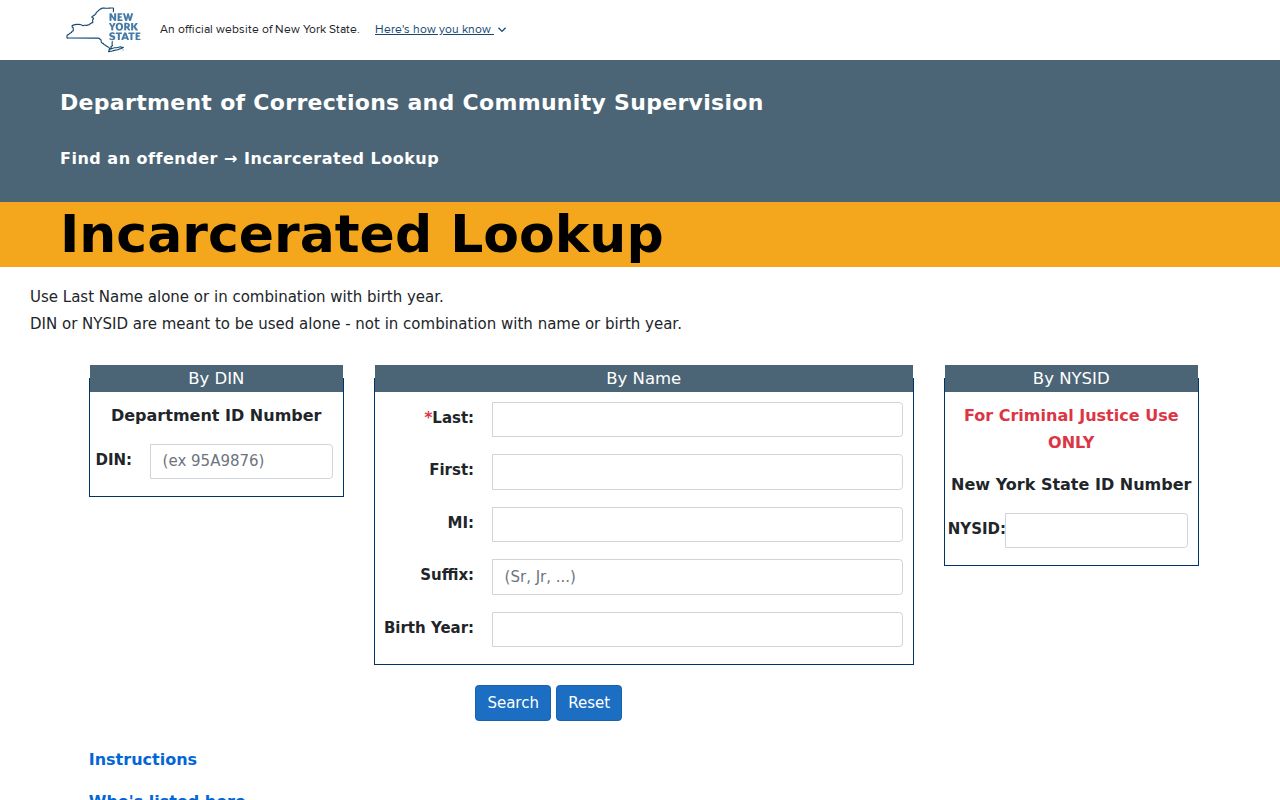
Read it as a state-custody source, then return to the sentencing court for the judgment and full disposition.
Inside a Madison County Criminal Record
A DCJS criminal-history response can group names and aliases, physical identifiers, NYSID and FBI identifiers, an arrest date and agency, fingerprint transaction numbers, charges, prosecutor action, court and docket information, dispositions, sentences, and supervision events. A court file adds pleadings, attorneys, hearings, bail events, motions, and document-level detail. Public copies may redact full birth data, financial numbers, victim or minor identities, medical facts, and sealed material.
| Name and identifiers | Legal name, aliases, physical descriptors, and assigned numbers where authorized. |
|---|---|
| Arrest and booking | Agency, date, arrest number, fingerprint transaction, charges, bail, and release. |
| Filed case | Court, docket, accusatory instrument, filed charges, appearances, and motions. |
| Disposition | The result for each charge, such as conviction, dismissal, or acquittal. |
| Sentence | Custody, probation, fine, restitution, or other terms reported by the court. |
| Sealing status | A notice that the entry is restricted or omitted from ordinary public access. |
- Arraignment
- The first court proceeding where accusations and rights are addressed.
- Disposition
- The way a filed charge ended.
- Remand
- Court-ordered custody without bail.
- Recognizance
- Release based on a promise to return to court.
Madison County Warrant App
No comprehensive county warrant webpage was confirmed. The practical chain is the issuing court, the Sheriff’s Office, any public court event, and a narrow FOIL request when disclosure is lawful. Since the old county warrant page is unavailable, active warrants and Most Wanted information are effectively app-only through the free Madison County Sheriff, NY app. The official app features page also lists inmate lookup, jail information, registry mapping, tips, road alerts, and pistol-permit information.
A person dealing with their own possible warrant should call the named court and seek legal advice about appearance or surrender. Only the issuing court can vacate its warrant, and database removal may lag. Keep the written court disposition after a warrant is cleared.
Do not use an online absence to decide that a warrant is gone. Confirm status with the issuing Madison County court.
Public Access Laws in New York
The New York Freedom of Information Law starts with access to agency records, but it allows redaction or withholding for active investigations, confidential sources, personal privacy, safety, juvenile information, and records sealed by another statute. It does not force an office to create a record or answer questions. Judiciary Law separately directs clerks to search and certify court files upon lawful request and fee. Executive Law authorizes DCJS to maintain and control the state repository.
Key New York laws:
Public Officers Law §87 sets FOIL access and exemptions.
Judiciary Law §255 governs clerk searches and certified court records.
Executive Law §837 authorizes DCJS criminal-history functions.
CPL 160.50 seals records after qualifying favorable outcomes.
Public does not mean complete. A name result may omit sealed cases, and a released police report can carry lawful redactions.
Madison County Criminal Records FOIL
Madison County accepts FOIL requests through its online portal, by email at foil@madisoncounty.ny.gov, or by mail to the Records Access Officer, Board of Supervisors Office, P.O. Box 635, Wampsville, NY 13163. The county promises acknowledgment within five business days. Describe the department, date range, location, report number if known, exact record portions, and preferred delivery method. Electronic delivery can reduce copy costs.
The Sheriff FAQ says its arrest record response covers only Sheriff’s Office arrests. Oneida, Chittenango, Canastota, New York State Police, and campus police keep their own reports. The posted general copy rule is 25 cents per page when eight or more pages result, while the Sheriff FAQ lists 25 cents per arrest-record page and $5 per photograph. Jail medical records instead go to booking@madisoncounty.ny.gov or 315-366-2289.
| Madison County channel | Use | Contact |
|---|---|---|
| County FOIL portal | Existing county and Sheriff records | Online request page |
| Narrow written request | foil@madisoncounty.ny.gov | |
| Request or written appeal | P.O. Box 635, Wampsville, NY 13163 |
The county’s official government page leads to department and records channels.

Choosing the originating department is essential because county FOIL cannot supply a village police report.
Sealed, Expunged, and Restricted Records
New York generally uses record sealing, not physical expungement of adult records. CPL 160.50 ordinarily seals arrest and prosecution records after a favorable termination. CPL 160.55 covers specified violation-level outcomes. CPL 160.58 addresses some drug-treatment cases, while CPL 160.59 lets a person seek judicial sealing of up to two eligible convictions, only one a felony, after the statutory wait. Listed serious offenses are excluded.
Clean Slate under CPL 160.57 took effect on November 16, 2024, and gives OCA three years for implementation. Eligible misdemeanors generally use a three-year clock and eligible felonies an eight-year clock after sentence or release, with pending charges and later convictions affecting timing. Sealing is not destruction. Police, courts, prosecutors, and other authorized entities retain defined access.
For a Madison County conviction, identify the exact court, obtain a certificate of disposition if needed, file with that court, and later check both the public docket and one’s DCJS review. No Madison-specific sealing fee or local packet was confirmed.
Madison County Supervision Records
Madison County Probation and New York parole are not the same. County Probation conducts pre-plea and presentence work and supervises court-ordered probation. Its office at 138 North Court Street is appointment-only, with a public line at 315-366-2351. Case notes, officer details, treatment data, and investigation reports are not a public database. The sentencing docket may show the probation sentence without exposing supervision notes.
Parole and post-release supervision are state functions under DOCCS Community Supervision and the New York State Board of Parole. DOCCS lookup may show state custody or community-supervision fields, but the assigned office should confirm current status when disclosure is authorized. An online absence does not prove that supervision ended.
The county Probation page identifies its local role and appointment rule.
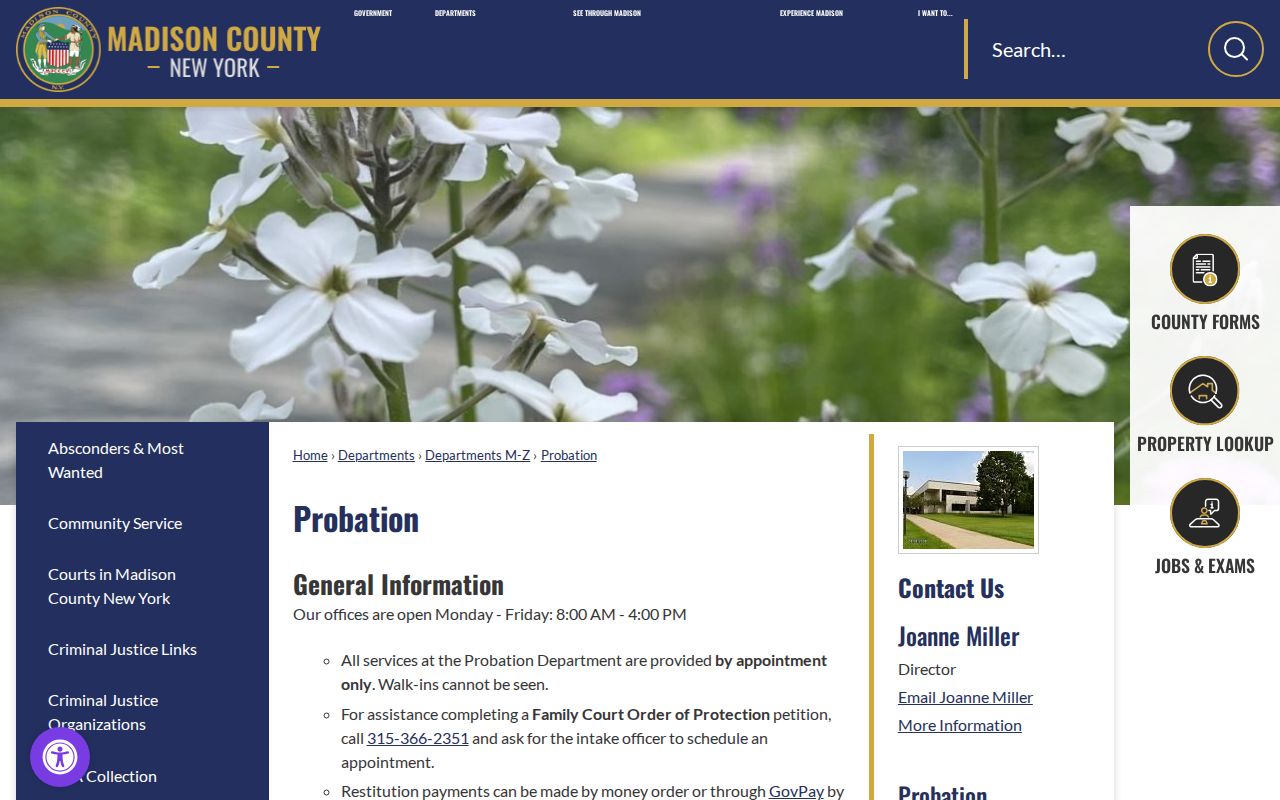
Its county function should not be confused with DOCCS parole or post-release supervision.
Madison County Criminal Records by City
Local police reports and village or city court files stay with their creators. Oneida has its own police records desk, blotter, FOIL route, and City Court. Chittenango’s police, court, and village offices share a Genesee Street site, while Canastota’s Village Court shares a counter with Lenox Town Court. Those differences change where a search begins, even when county booking or felony transfer later adds a Wampsville record.
Oneida Criminal Records
10,329 residents in the 2020 Census. Start with Oneida Police records and City Court.
Chittenango Criminal Records
4,896 residents in the 2020 Census. Village Police and Village Court keep distinct files.
Canastota Criminal Records
4,556 residents in the 2020 Census. Specify Village Court or Lenox Town Court when calling.
Madison County Records History
Madison County’s record geography grew from a long dispute over access to the county seat. The county was created in 1806 and first used a jail as its courthouse. A courthouse at Morrisville burned in 1864, officially attributed with caution to members of the Loomis Gang who thought indictments were inside. Travel by horse, stagecoach, sleigh, or foot made Morrisville hard to reach. After petitions and an unrealized trolley plan, Wampsville became the county seat in 1907.
That history still has a practical lesson. Madison County now has more than twenty local justice-court contacts in addition to County Court. A sheriff-only or county-only search will miss records that stayed with a city, town, or village. Use the Court Assignments page to match a case to its calendar and clerk.
The county’s official courthouse history preserves the Morrisville-to-Wampsville account.
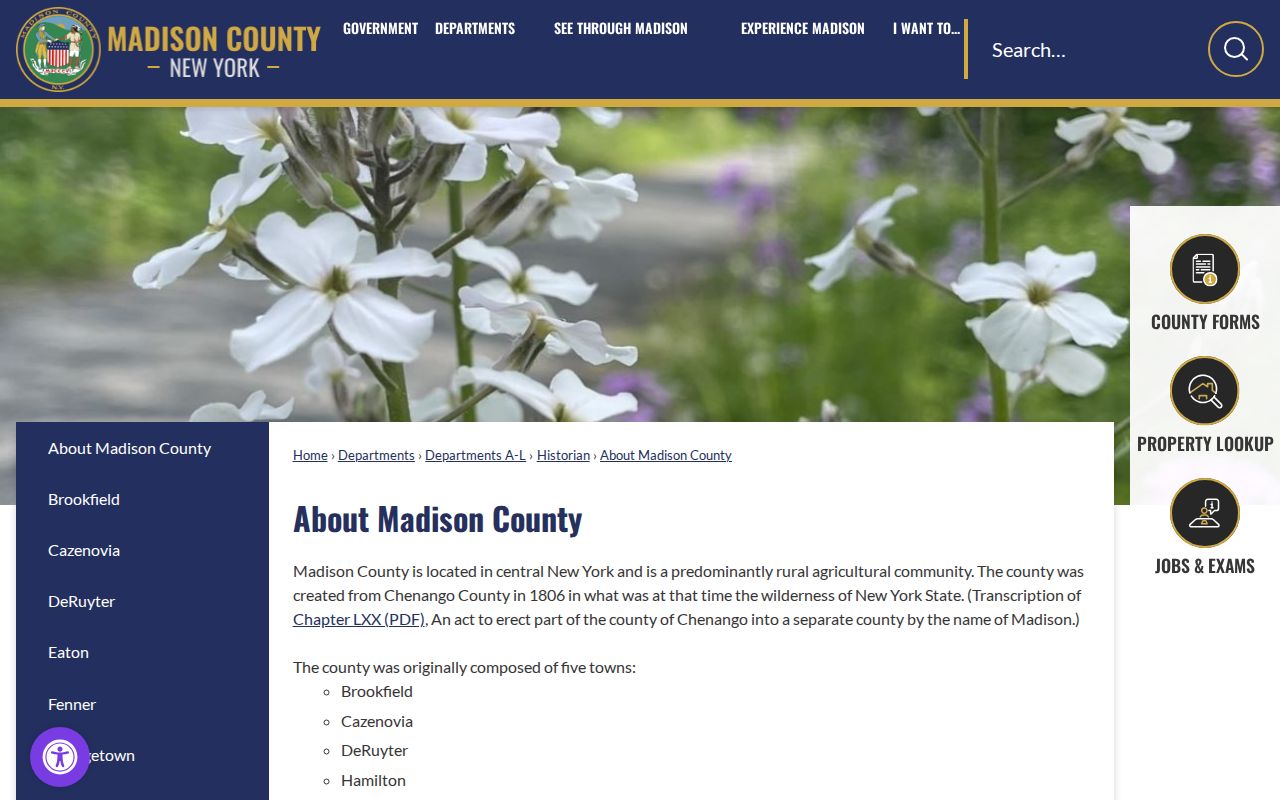
The modern search problem follows the same geography: the right record depends on which court or agency handled the event.
The justice-court directory shows the county’s many local criminal record custodians.
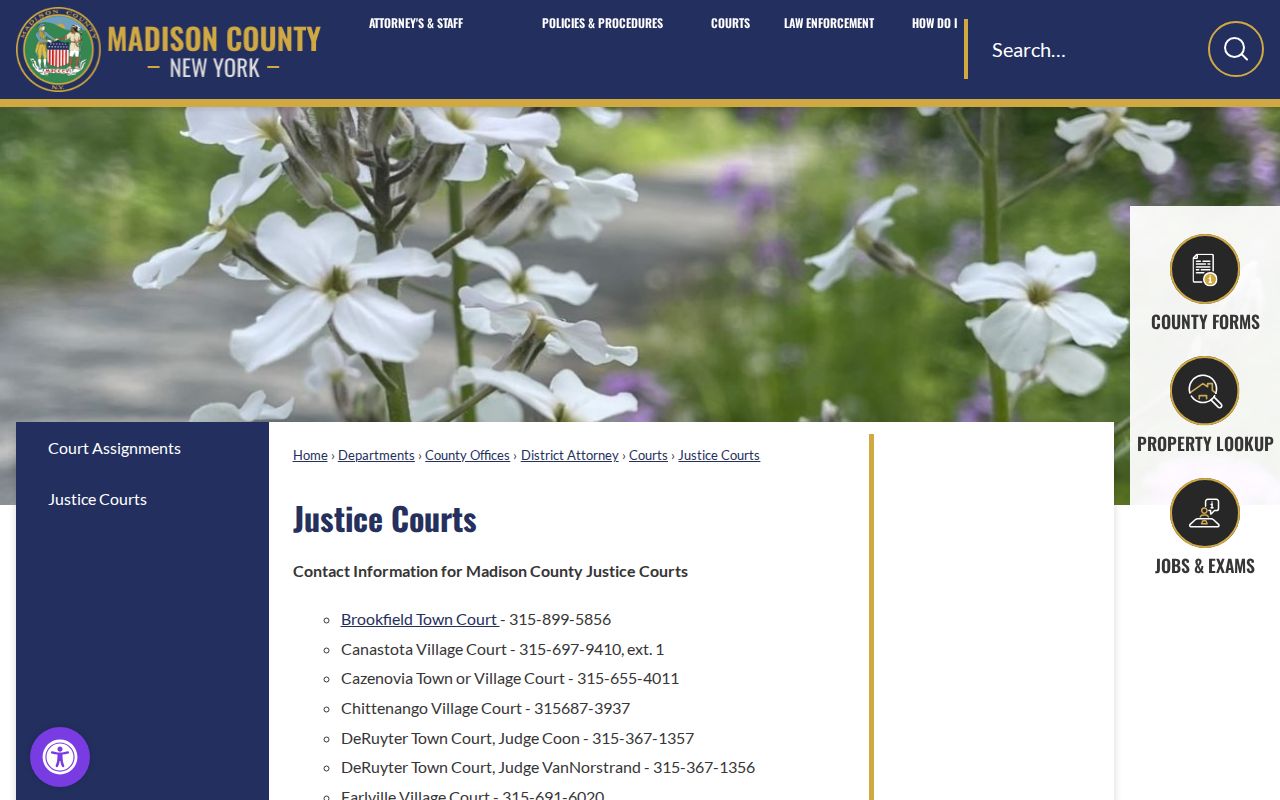
Call before traveling because calendars, clerk hours, and the court holding an older file can differ.